
 Extreme fluctuations in operating state parameters are another destructive mechanism. Low-octane (< 87RON) fuel causes abnormal combustion in the direct injection system. The ECU actively increases the oil pressure to 85 PSI (far exceeding the standard range of 55-65 PSI) to compensate for the power. This enables the pump core motor to operate at 100% load continuously, and the coil temperature can rise to 140°C within 15 minutes, exceeding the design limit by 35%. Bosch's fault analysis report indicates that under overheating conditions, the insulation impedance value of the armature winding will decline at a rate of 0.5MΩ per minute. When it drops below 2MΩ, the short-circuit risk increases by 90%, and at the same time, a shrill electromagnetic howling noise is generated. The annual automotive reliability survey by J.D. Power shows that vehicles using uncertified gasoline have a 3.8% probability of fuel system failure in the first year, which is 210% higher than that of users with compliant fuel products.
The economic benefits of preventive measures are remarkable. Choose clean gasoline certified by API SN Plus/SP. Its anti-sediment ability is 50% higher than that of ordinary fuel, and the probability of pump core filter screen clogging can be reduced by 75%. Regularly replacing the fuel filter (it is recommended to do so every 30,000 kilometers) can intercept 99% of harmful particles with a diameter greater than 10μm. Tracking data from the California Air Resources Board (CARB) shows that car owners who continuously use gasoline of grade 98 or above have an average fault-free mileage of 180,000 kilometers for their vehicle's fuel system, which is 70% longer than that of those using grade 87 gasoline. When the Fuel Pump is damaged by poor-quality gasoline, the maintenance cost includes assembly replacement (600-1,000), fuel tank cleaning (300), and nozzle cleaning (150), with a total expenditure exceeding $1,500, accompanied by an economic loss of 12% increase in fuel consumption.
Extreme fluctuations in operating state parameters are another destructive mechanism. Low-octane (< 87RON) fuel causes abnormal combustion in the direct injection system. The ECU actively increases the oil pressure to 85 PSI (far exceeding the standard range of 55-65 PSI) to compensate for the power. This enables the pump core motor to operate at 100% load continuously, and the coil temperature can rise to 140°C within 15 minutes, exceeding the design limit by 35%. Bosch's fault analysis report indicates that under overheating conditions, the insulation impedance value of the armature winding will decline at a rate of 0.5MΩ per minute. When it drops below 2MΩ, the short-circuit risk increases by 90%, and at the same time, a shrill electromagnetic howling noise is generated. The annual automotive reliability survey by J.D. Power shows that vehicles using uncertified gasoline have a 3.8% probability of fuel system failure in the first year, which is 210% higher than that of users with compliant fuel products.
The economic benefits of preventive measures are remarkable. Choose clean gasoline certified by API SN Plus/SP. Its anti-sediment ability is 50% higher than that of ordinary fuel, and the probability of pump core filter screen clogging can be reduced by 75%. Regularly replacing the fuel filter (it is recommended to do so every 30,000 kilometers) can intercept 99% of harmful particles with a diameter greater than 10μm. Tracking data from the California Air Resources Board (CARB) shows that car owners who continuously use gasoline of grade 98 or above have an average fault-free mileage of 180,000 kilometers for their vehicle's fuel system, which is 70% longer than that of those using grade 87 gasoline. When the Fuel Pump is damaged by poor-quality gasoline, the maintenance cost includes assembly replacement (600-1,000), fuel tank cleaning (300), and nozzle cleaning (150), with a total expenditure exceeding $1,500, accompanied by an economic loss of 12% increase in fuel consumption.
Can bad gas ruin a new fuel pump?
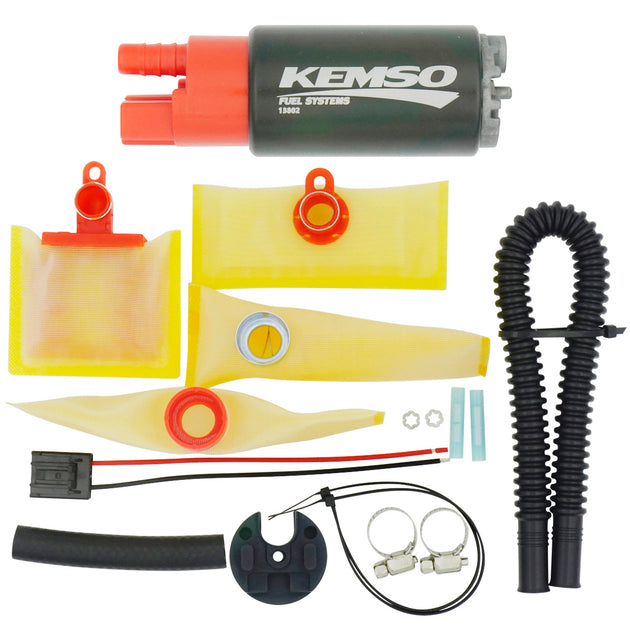
The damage of inferior gasoline to the brand-new Fuel Pump has a clear scientific basis. Tests conducted by the U.S. Department of Energy laboratory show that when the concentration of impurities in gasoline, such as silane particles, exceeds 30ppm (parts per million) or the water content is higher than 0.15%, these substances will form a grinding effect under the high-speed operation of a fuel pump with a pressure as high as 700 kPa (the motor speed is approximately 3,000 revolutions per minute). The research case shows that the thickness loss rate of the wear-resistant layer of the brand-new pump body bearing exposed to this environment reaches 170% of the normal working condition, resulting in the performance attenuation of the component with a design life of 150,000 kilometers within less than 20,000 kilometers, and the output flow rate is 18% lower than the standard value.
The corrosive effect caused by key chemical pollutants is particularly fatal. Gasoline with an ethanol content exceeding the standard by 10% (the typical compliance limit is E10) will accelerate the oxidation of metal parts. Data shows that the corrosion rate of brush contact points thus increases by 70%. More seriously, oil products with sulfides (> 50ppm) and acid values exceeding the standard (TAN > 0.1mg KOH/g) can decompose the sealing materials inside the pump. Tests by the Society of Automotive Engineers (SAE) have confirmed that: Fluororubber seals that come into contact with inferior oil products will experience a 15-point decrease in hardness and a volume expansion rate as high as 9% (allowable value ≤3%) after continuous operation for 200 hours, directly damaging the airtightness of the pump core. In the large-scale Fuel quality accident in the Midwestern United States in 2023, the substandard gasoline supplied by the involved gas stations caused fuel system failures in more than 4,200 new vehicles, and the Fuel Pump replacement rate increased sharply by 300%.
Extreme fluctuations in operating state parameters are another destructive mechanism. Low-octane (< 87RON) fuel causes abnormal combustion in the direct injection system. The ECU actively increases the oil pressure to 85 PSI (far exceeding the standard range of 55-65 PSI) to compensate for the power. This enables the pump core motor to operate at 100% load continuously, and the coil temperature can rise to 140°C within 15 minutes, exceeding the design limit by 35%. Bosch's fault analysis report indicates that under overheating conditions, the insulation impedance value of the armature winding will decline at a rate of 0.5MΩ per minute. When it drops below 2MΩ, the short-circuit risk increases by 90%, and at the same time, a shrill electromagnetic howling noise is generated. The annual automotive reliability survey by J.D. Power shows that vehicles using uncertified gasoline have a 3.8% probability of fuel system failure in the first year, which is 210% higher than that of users with compliant fuel products.
The economic benefits of preventive measures are remarkable. Choose clean gasoline certified by API SN Plus/SP. Its anti-sediment ability is 50% higher than that of ordinary fuel, and the probability of pump core filter screen clogging can be reduced by 75%. Regularly replacing the fuel filter (it is recommended to do so every 30,000 kilometers) can intercept 99% of harmful particles with a diameter greater than 10μm. Tracking data from the California Air Resources Board (CARB) shows that car owners who continuously use gasoline of grade 98 or above have an average fault-free mileage of 180,000 kilometers for their vehicle's fuel system, which is 70% longer than that of those using grade 87 gasoline. When the Fuel Pump is damaged by poor-quality gasoline, the maintenance cost includes assembly replacement (600-1,000), fuel tank cleaning (300), and nozzle cleaning (150), with a total expenditure exceeding $1,500, accompanied by an economic loss of 12% increase in fuel consumption.
Extreme fluctuations in operating state parameters are another destructive mechanism. Low-octane (< 87RON) fuel causes abnormal combustion in the direct injection system. The ECU actively increases the oil pressure to 85 PSI (far exceeding the standard range of 55-65 PSI) to compensate for the power. This enables the pump core motor to operate at 100% load continuously, and the coil temperature can rise to 140°C within 15 minutes, exceeding the design limit by 35%. Bosch's fault analysis report indicates that under overheating conditions, the insulation impedance value of the armature winding will decline at a rate of 0.5MΩ per minute. When it drops below 2MΩ, the short-circuit risk increases by 90%, and at the same time, a shrill electromagnetic howling noise is generated. The annual automotive reliability survey by J.D. Power shows that vehicles using uncertified gasoline have a 3.8% probability of fuel system failure in the first year, which is 210% higher than that of users with compliant fuel products.
The economic benefits of preventive measures are remarkable. Choose clean gasoline certified by API SN Plus/SP. Its anti-sediment ability is 50% higher than that of ordinary fuel, and the probability of pump core filter screen clogging can be reduced by 75%. Regularly replacing the fuel filter (it is recommended to do so every 30,000 kilometers) can intercept 99% of harmful particles with a diameter greater than 10μm. Tracking data from the California Air Resources Board (CARB) shows that car owners who continuously use gasoline of grade 98 or above have an average fault-free mileage of 180,000 kilometers for their vehicle's fuel system, which is 70% longer than that of those using grade 87 gasoline. When the Fuel Pump is damaged by poor-quality gasoline, the maintenance cost includes assembly replacement (600-1,000), fuel tank cleaning (300), and nozzle cleaning (150), with a total expenditure exceeding $1,500, accompanied by an economic loss of 12% increase in fuel consumption.