
The scale of the 2026 Beijing International Automotive Exhibition (Auto China 2026) is a clear indicator that the center of gravity for the global automotive industry has firmly shifted. By expanding to a dual-venue model totaling 380,000 square meters, the event has physically surpassed legacy shows in Frankfurt and Detroit. This isn't just about floor space; it’s about the density of innovation. With 1,451 vehicles on display, including 181 global premieres, the industry is seeing an unprecedented 12.5% ratio of brand-new hardware to existing models. This high iteration rate suggests that the product lifecycle in the EV and smart-vehicle sector has compressed from the traditional 5-7 years down to roughly 18-24 months.
Technically, the "headline" data points from domestic manufacturers like Changan and BYD reveal a push toward extreme efficiency and vertical integration. Changan’s new HEV hybrid technology, which eliminates traditional planetary gears, has achieved a breakthrough fuel consumption rate of just 2.98 liters per 100 kilometers in urban cycles. For a consumer, this represents a significant reduction in operational expenditure (OPEX), essentially setting a new benchmark for thermal efficiency and energy management. Similarly, BYD’s "full-hall" matrix, featuring the next-generation Blade Battery and high-power FLASH charging, targets the two biggest pain points of EV adoption: energy density and charging latency. By controlling the entire supply chain, these firms are maintaining profit margins even as the "price war" in the Chinese market continues to intensify.
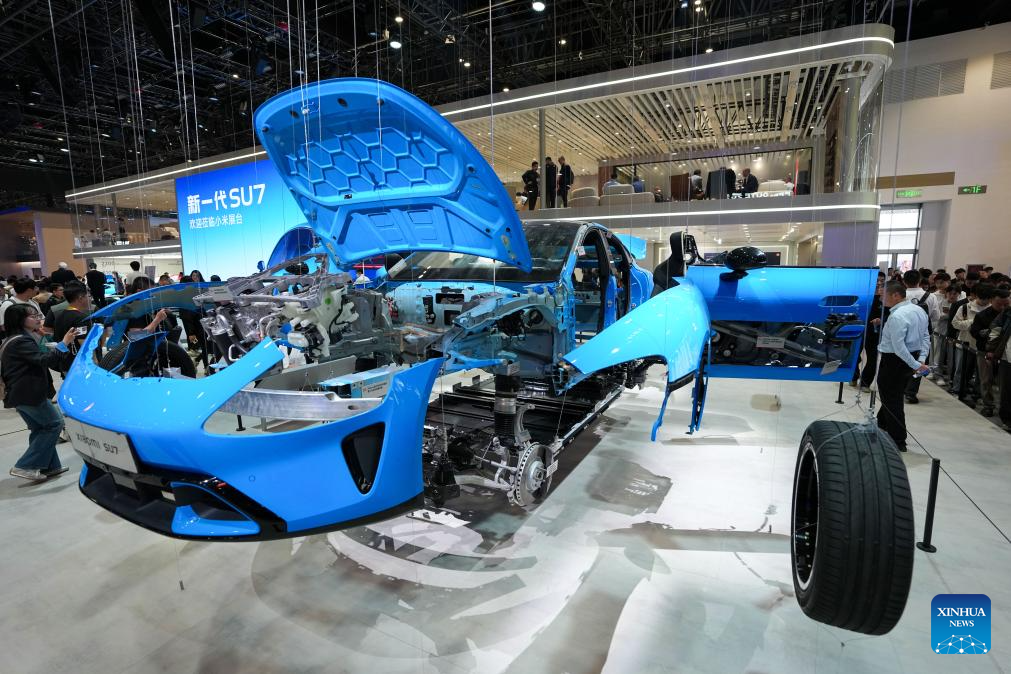
According to the People's Daily, the show also highlights a critical transition from driver-assist to true autonomy. Geely’s debut of China’s first purpose-built L4 Robotaxi, scheduled for mass production in 2027, marks a shift in commercial strategy toward mobility-as-a-service (MaaS). When these vehicles begin regular operation through platforms like CaoCao Mobility, the efficiency of urban transport could see a 30% to 40% increase in vehicle utilization rates. This transition is supported by a robust ecosystem of Chinese intelligent driving solutions from providers like Huawei and Momenta, which are now being integrated into premium German platforms like the BMW Neue Klasse and the Mercedes-Benz electric GLC.
The localization strategy of international marques is perhaps the most telling data point of all. Seeing Audi debut a C9-generation A6L specifically tailored for the Chinese market suggests that "Global" models are increasingly being defined by "Chinese" specifications. By embedding local AI and smart cockpit technology, multinational brands are attempting to recapture a market share that has seen a 15% to 20% swing toward domestic NEV (New Energy Vehicle) startups over the last three years. Ultimately, Auto China 2026 proves that the future of the automotive industry is no longer about single-model competition; it is a battle of systematic industrial strength, where the winners are determined by their ability to integrate high-density data, ultra-low energy consumption, and rapid L4 commercialization into a cohesive, cost-effective platform.
News source: https://peoplesdaily.pdnews.cn/china/er/30051991334