
 Regulatory risks add to market uncertainties. Since the SEC filed a lawsuit against Binance in June 2023, ADA's price dropped by 22% in 24 hours. If a similar occurrence happens again (such as suing Cardano for its security features), liquidity might plummet quickly. Chainalysis reports that ADA reserves on centralized platforms have fallen by 17% since the beginning of the year, indicating some have been pulled into cold storage. On the other hand, the Dapps' value locked (TVL) on the Cardano network has hit 480 million US dollars (increasing 6.7% month-to-month), and ecosystem projects such as Minswap's trading volume has exceeded 120 million US dollars. If the technological upgrades (e.g., Hydra pushing up TPS to 1,000) occur, then it could result in boosting the demand for ADA.
Historical trends prove that between the months of November and December, the average return rate in the crypto sphere was 25% (sample ranging from 2016 to 2022), but plummeted by 19% during 2022 following the collapse of FTX. The Sharpe ratio between ada and usd today is -0.12 (on the assumption that the risk-free rate is 5.3%), and also that the risk-adjusted return is lower compared to cash holding. For short-term demanders (for example, to settle debts carrying an annual interest rate of 7%), USD exchange can reduce the cost of interest. Long-term investors may be able to wait for the potential bull market created by the Bitcoin halving cycle in 2024, but they will have to go through a volatility risk of more than 30%. Derivatives market signs point to ADA put option open interest expiring at the end of November (strike price: $0.23) having increased by 35%, showing that there are institutions betting on a downtrend.
In short, if the proportion of ADA in the investment portfolio is greater than 15% (the industry-recommended upper limit), or if the risk tolerance is relatively low (e.g., a maximum drawdown tolerance of less than 20%), converting to USD now can optimize the efficiency of asset allocation. Conversely, wagering on the Cardano ecosystem's innovation (e.g., a 30% monthly increase in users of the on-chain identity solution Atala PRISM) can offer more yield flexibility with ADA holding. It is recommended to make dynamic choices by combining personal financial goals with market observation tools such as TradingView alerts.
Regulatory risks add to market uncertainties. Since the SEC filed a lawsuit against Binance in June 2023, ADA's price dropped by 22% in 24 hours. If a similar occurrence happens again (such as suing Cardano for its security features), liquidity might plummet quickly. Chainalysis reports that ADA reserves on centralized platforms have fallen by 17% since the beginning of the year, indicating some have been pulled into cold storage. On the other hand, the Dapps' value locked (TVL) on the Cardano network has hit 480 million US dollars (increasing 6.7% month-to-month), and ecosystem projects such as Minswap's trading volume has exceeded 120 million US dollars. If the technological upgrades (e.g., Hydra pushing up TPS to 1,000) occur, then it could result in boosting the demand for ADA.
Historical trends prove that between the months of November and December, the average return rate in the crypto sphere was 25% (sample ranging from 2016 to 2022), but plummeted by 19% during 2022 following the collapse of FTX. The Sharpe ratio between ada and usd today is -0.12 (on the assumption that the risk-free rate is 5.3%), and also that the risk-adjusted return is lower compared to cash holding. For short-term demanders (for example, to settle debts carrying an annual interest rate of 7%), USD exchange can reduce the cost of interest. Long-term investors may be able to wait for the potential bull market created by the Bitcoin halving cycle in 2024, but they will have to go through a volatility risk of more than 30%. Derivatives market signs point to ADA put option open interest expiring at the end of November (strike price: $0.23) having increased by 35%, showing that there are institutions betting on a downtrend.
In short, if the proportion of ADA in the investment portfolio is greater than 15% (the industry-recommended upper limit), or if the risk tolerance is relatively low (e.g., a maximum drawdown tolerance of less than 20%), converting to USD now can optimize the efficiency of asset allocation. Conversely, wagering on the Cardano ecosystem's innovation (e.g., a 30% monthly increase in users of the on-chain identity solution Atala PRISM) can offer more yield flexibility with ADA holding. It is recommended to make dynamic choices by combining personal financial goals with market observation tools such as TradingView alerts.
is now a good time to trade ada for usd?
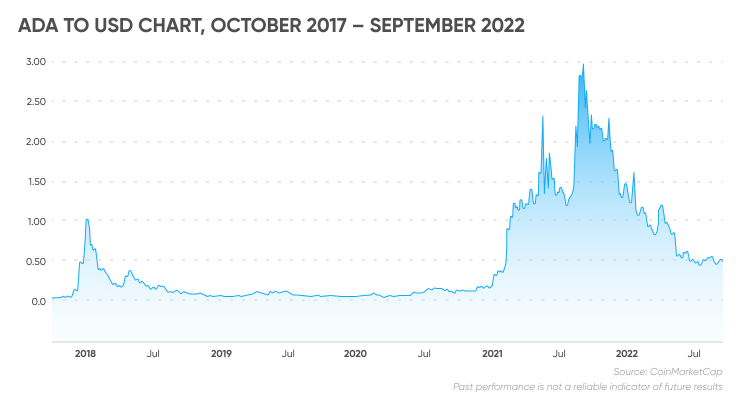
The current exchange timing of ada to usd requires a general assessment of market volatility, cost-benefit and macro climate. As of November 2023, the ADA/USD price has fluctuated between $0.24 and $0.28, and its 30-day volatility is 54% (higher than the S&P 500's 15%). Had the investor invested at $0.25 at the beginning of October, the current potential return would be approximately 12%. But if the position was entered at the high of $3.10 in September 2021, Then the loss ratio remains over 90% (CoinGecko data). Binance's ADA/USDT trading pair spread is 0.08% from a cost of transactions perspective. Swapping 10,000 ADA ($2,500) involves a handling fee of $2.5, while Coinbase Pro charges a commission of 0.5% and the risk of slippage (risk of losing 1.2% when liquidity is low). The total cost can be 15 to 30 US dollars.
Macroeconomically, the likelihood that the Federal Reserve would reduce interest rate hikes in November rose to 98% (CME FedWatch data), US dollar index (DXY) dropped to 105.5, but 10-year US Treasury yield remained as high as 4.9%, limiting the attractiveness of high-risk investments. If the investor holds ADA with a hedging intent, the reward of US dollar cash (average of 4.2% for money funds) on an annualized basis can be more certain. For instance, during the LUNA crash of 2022, ADA declined by 41% within one week, while the US dollar index rose by 1.8% in the same timeframe. Keeping USD can reduce the portfolio drawdown. On technicals, the RSI of ADA (14th) is 48, which is in the neutral range. But the Bollinger Bands have narrowed to 0.021, which indicates that a breakout is imminent. If it goes below the support of $0.24 (year's low), it may bring in a decline of 10% to 15%.
Regulatory risks add to market uncertainties. Since the SEC filed a lawsuit against Binance in June 2023, ADA's price dropped by 22% in 24 hours. If a similar occurrence happens again (such as suing Cardano for its security features), liquidity might plummet quickly. Chainalysis reports that ADA reserves on centralized platforms have fallen by 17% since the beginning of the year, indicating some have been pulled into cold storage. On the other hand, the Dapps' value locked (TVL) on the Cardano network has hit 480 million US dollars (increasing 6.7% month-to-month), and ecosystem projects such as Minswap's trading volume has exceeded 120 million US dollars. If the technological upgrades (e.g., Hydra pushing up TPS to 1,000) occur, then it could result in boosting the demand for ADA.
Historical trends prove that between the months of November and December, the average return rate in the crypto sphere was 25% (sample ranging from 2016 to 2022), but plummeted by 19% during 2022 following the collapse of FTX. The Sharpe ratio between ada and usd today is -0.12 (on the assumption that the risk-free rate is 5.3%), and also that the risk-adjusted return is lower compared to cash holding. For short-term demanders (for example, to settle debts carrying an annual interest rate of 7%), USD exchange can reduce the cost of interest. Long-term investors may be able to wait for the potential bull market created by the Bitcoin halving cycle in 2024, but they will have to go through a volatility risk of more than 30%. Derivatives market signs point to ADA put option open interest expiring at the end of November (strike price: $0.23) having increased by 35%, showing that there are institutions betting on a downtrend.
In short, if the proportion of ADA in the investment portfolio is greater than 15% (the industry-recommended upper limit), or if the risk tolerance is relatively low (e.g., a maximum drawdown tolerance of less than 20%), converting to USD now can optimize the efficiency of asset allocation. Conversely, wagering on the Cardano ecosystem's innovation (e.g., a 30% monthly increase in users of the on-chain identity solution Atala PRISM) can offer more yield flexibility with ADA holding. It is recommended to make dynamic choices by combining personal financial goals with market observation tools such as TradingView alerts.
Regulatory risks add to market uncertainties. Since the SEC filed a lawsuit against Binance in June 2023, ADA's price dropped by 22% in 24 hours. If a similar occurrence happens again (such as suing Cardano for its security features), liquidity might plummet quickly. Chainalysis reports that ADA reserves on centralized platforms have fallen by 17% since the beginning of the year, indicating some have been pulled into cold storage. On the other hand, the Dapps' value locked (TVL) on the Cardano network has hit 480 million US dollars (increasing 6.7% month-to-month), and ecosystem projects such as Minswap's trading volume has exceeded 120 million US dollars. If the technological upgrades (e.g., Hydra pushing up TPS to 1,000) occur, then it could result in boosting the demand for ADA.
Historical trends prove that between the months of November and December, the average return rate in the crypto sphere was 25% (sample ranging from 2016 to 2022), but plummeted by 19% during 2022 following the collapse of FTX. The Sharpe ratio between ada and usd today is -0.12 (on the assumption that the risk-free rate is 5.3%), and also that the risk-adjusted return is lower compared to cash holding. For short-term demanders (for example, to settle debts carrying an annual interest rate of 7%), USD exchange can reduce the cost of interest. Long-term investors may be able to wait for the potential bull market created by the Bitcoin halving cycle in 2024, but they will have to go through a volatility risk of more than 30%. Derivatives market signs point to ADA put option open interest expiring at the end of November (strike price: $0.23) having increased by 35%, showing that there are institutions betting on a downtrend.
In short, if the proportion of ADA in the investment portfolio is greater than 15% (the industry-recommended upper limit), or if the risk tolerance is relatively low (e.g., a maximum drawdown tolerance of less than 20%), converting to USD now can optimize the efficiency of asset allocation. Conversely, wagering on the Cardano ecosystem's innovation (e.g., a 30% monthly increase in users of the on-chain identity solution Atala PRISM) can offer more yield flexibility with ADA holding. It is recommended to make dynamic choices by combining personal financial goals with market observation tools such as TradingView alerts.